
Fishing in Gatlinburg, TN: Best Trout Spots, Licenses, Rules & Local Tips
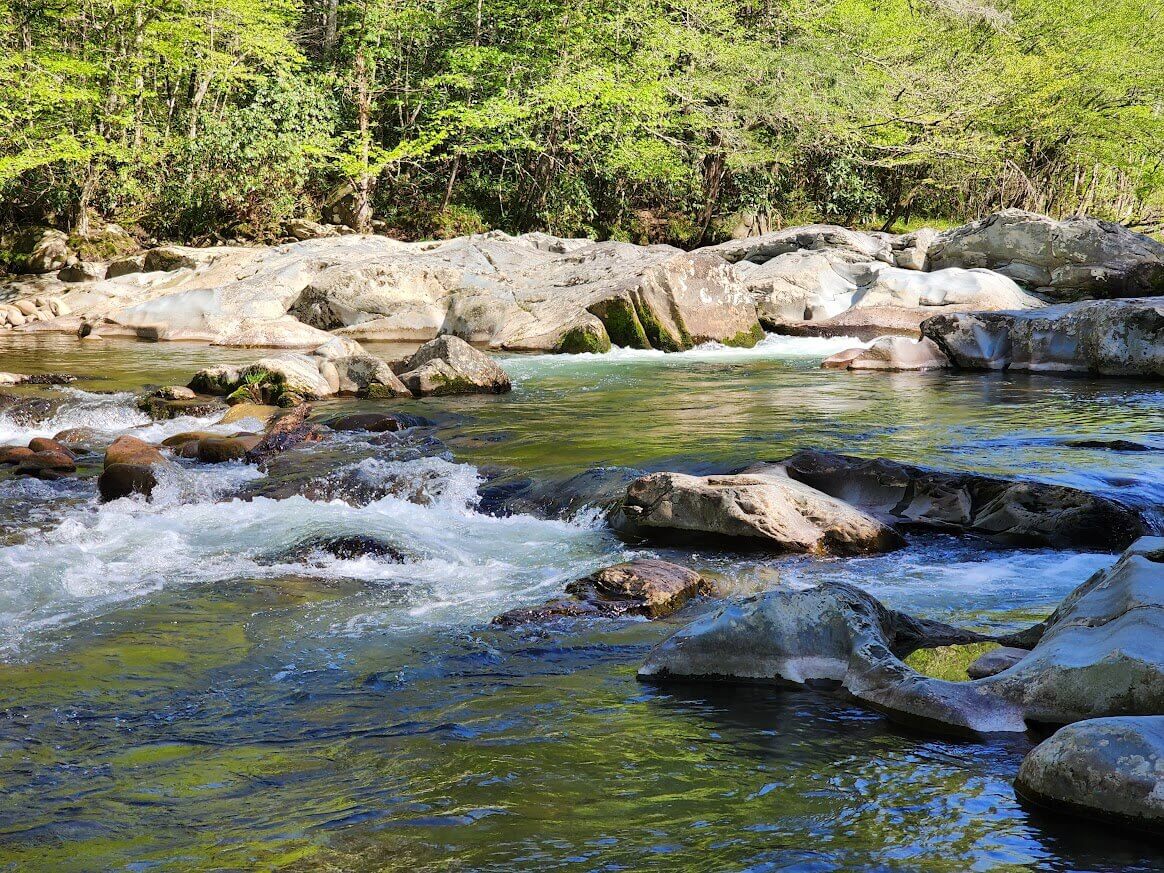
Fishing in Gatlinburg, TN, can be as easy as casting into the West Prong of the Little Pigeon River near town or heading into Great Smoky Mountains National Park for wild mountain streams surrounded by forest. Some of the best options for fishing near Gatlinburg, TN, include the West Prong, Herbert Holt Park, Greenbrier, Abrams Creek, the East Prong of Little River, and Cosby Creek.
The big thing to know before you grab a rod is that Gatlinburg city waters and Great Smoky Mountains National Park waters follow different fishing regulations. License requirements, bait rules, harvest limits, and even weekly closures can change depending on exactly where you fish.
This guide is for visitors planning a casual fishing trip, families looking for easy-access trout fishing, beginners wondering where to start, and experienced anglers comparing streams around Gatlinburg and the Smokies.
Updated September 2026: Fishing regulations, licenses, stocking schedules, access conditions, and stream closures can change. Always confirm current Gatlinburg requirements with the Tennessee Wildlife Resources Agency and City of Gatlinburg. For national park waters, review the latest Great Smoky Mountains National Park fishing regulations before your trip.
Quick Guide to Fishing in Gatlinburg
| Planning question | Good option to know |
| Best overall for visitors | West Prong of the Little Pigeon River |
| Best beginner-friendly option | Easily accessible sections of the West Prong in Gatlinburg |
| Best for kids and families | Herbert Holt Park |
| Best for fly fishing | Greenbrier and mountain streams inside Great Smoky Mountains National Park |
| Best trout stream | West Prong and upper Little River areas |
| License required? | Usually yes, but requirements depend on age and whether you are fishing Gatlinburg city waters or national park waters |
| Best season | Spring and fall are favorites, but fishing opportunities exist year-round |
| Primary species | Rainbow trout, brook trout, brown trout, smallmouth bass, and rock bass |
One quick local tip before diving in: Gatlinburg-managed streams are closed to fishing every Thursday for trout stocking. That Thursday closure does not apply to all waters inside Great Smoky Mountains National Park.
Where to Go Fishing in Gatlinburg, TN
Not all Gatlinburg fishing spots offer the same experience. Some give you easy road access and stocked trout, while others require hiking, wading, or a little more patience.
| Fishing spot | Best for | Fish species | Access difficulty | License/permit notes | Nearby landmark or road | Best season |
| West Prong of the Little Pigeon River | Convenience, trout, first-time visitors | Rainbow trout, plus trout and smallmouth opportunities in park waters | Easy to moderate | Gatlinburg rules apply in city waters; NPS rules apply inside the park | Downtown Gatlinburg, Newfound Gap Road | Spring and fall, with year-round opportunities |
| Greenbrier | Fly fishing, scenery, quieter streams | Wild trout opportunities | Easy to moderate | National park license rules | Greenbrier Road area | Spring through fall |
| Abrams Creek | Experienced anglers, remote fishing | Smallmouth bass and other stream species | Moderate to difficult | National park rules | Cades Cove area | Spring and fall |
| East Prong of Little River | Larger water, trout and smallmouth fishing | Rainbow trout, brown trout, smallmouth bass | Easy roadside areas plus trail access | National park rules | Elkmont, Little River Road | Spring and fall |
| Herbert Holt Park | Kids, families, accessible fishing | Stocked rainbow trout | Easy | Special Gatlinburg city rules apply | Near downtown Gatlinburg | Spring through fall |
| Cosby Creek | Quieter mountain fishing | Brook trout and other park fish | Easy to moderate | National park rules | Cosby area | Spring, summer, and fall |
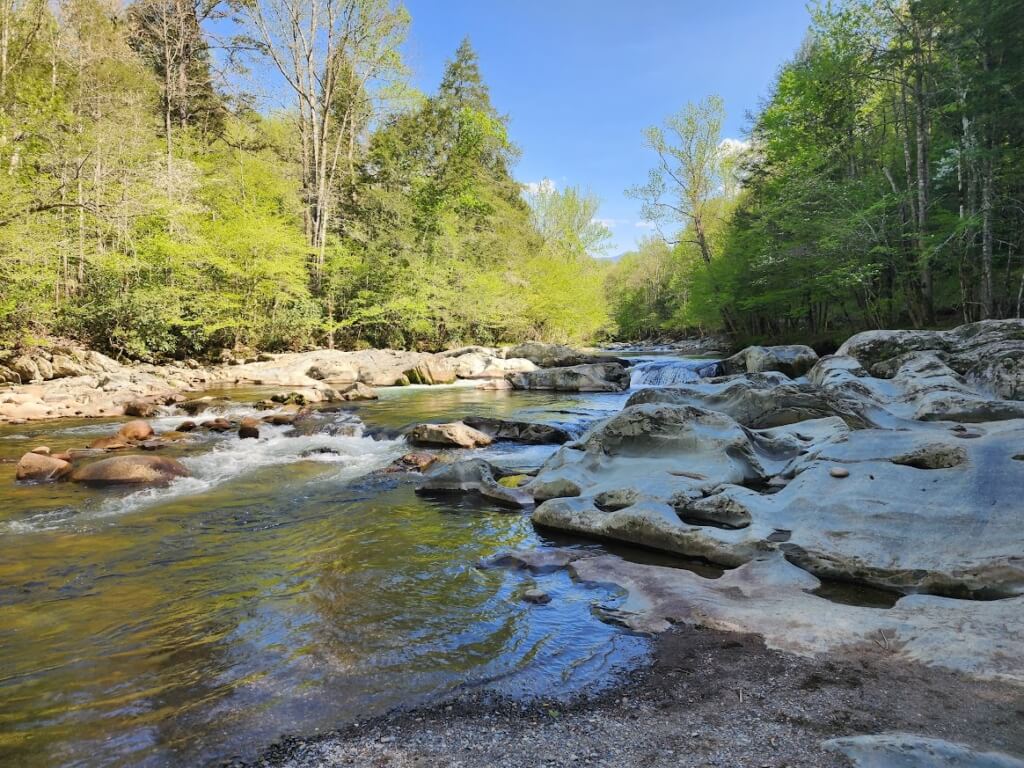
Best Trout Fishing Spots Near Gatlinburg
West Prong of the Little Pigeon River
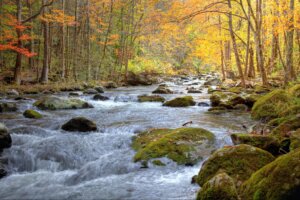
For many visitors, the West Prong of the Little Pigeon River is the first Gatlinburg fishing spot to know. It runs through the city and continues toward Great Smoky Mountains National Park, giving anglers convenient access without driving halfway across East Tennessee.
Within Gatlinburg-managed waters, the city maintains its trout fishery by raising rainbow trout at the Herbert Holt Park Trout Facility and stocking the West Prong every Thursday. Because of that stocking schedule, city-managed streams are closed to fishing on Thursdays.
Once the river crosses into Great Smoky Mountains National Park, park regulations take over. The lower stretches inside the park also provide smallmouth bass opportunities.
Best for: First-time visitors, convenient trout fishing, and anglers staying in Gatlinburg.
Access: The West Prong runs through Gatlinburg and can be reached in several areas before continuing toward the national park.
Good to know: Pay close attention to where you are fishing. Crossing from city-managed water into the national park can mean a completely different set of rules.
Local tip: If you’re unsure which regulations apply to the stretch in front of you, check the City of Gatlinburg fishing map or ask a local tackle shop before casting.
Greenbrier
First things first, it’s Greenbrier, not Greenbriar.
The Greenbrier area sits about 20 minutes east of Gatlinburg inside Great Smoky Mountains National Park. Dense forest, mountain streams, trail access, picnic areas, and a quieter atmosphere give this part of the Smokies a completely different feel from fishing downtown.
This is a good area to consider for fly fishing near Gatlinburg, especially if your idea of a good morning involves cool mountain water, rhododendron, and considerably fewer souvenir shops.
Best for: Fly fishing, wild mountain scenery, and anglers who want a quieter outing.
Fish: Trout opportunities vary by stream, elevation, water temperature, and season.
Access: Roadside areas and trail access provide several ways to reach the water.
Good to know: Greenbrier is inside Great Smoky Mountains National Park, so park fishing regulations apply.
Local tip: Check current park road and trail conditions before heading into Greenbrier, especially following heavy rain. Mountain streams can rise faster than they look.
Abrams Creek
Abrams Creek runs through the western side of Great Smoky Mountains National Park near Cades Cove and offers a more adventurous fishing experience than the easy-access waters around Gatlinburg.
The creek is especially notable for its biological diversity. Its lower reaches support a wide range of aquatic life, while stretches closer to Abrams Falls can provide smallmouth bass opportunities. Access to some of the better fishing requires more effort, so this is a better fit for anglers comfortable exploring beyond roadside pull-offs.
Best for: Experienced anglers, smallmouth fishing, and visitors who don’t mind earning their fishing spot.
Fish: Smallmouth bass are especially notable in lower sections. Trout opportunities vary farther upstream.
Access: Moderate to difficult, depending on the section.
Nearby: Cades Cove and Abrams Falls. If you’re making a day of it, our Cades Cove trail guide covers the loop, hiking opportunities, history, and other stops around the valley.
Good to know: Check current Tennessee fish-consumption advisories before keeping fish from Abrams Creek.
Local tip: Abrams Creek deserves more planning than a casual roadside stop. Check trail access, weather, and stream conditions before making the trip.
East Prong of Little River
The East Prong of Little River offers a little bit of everything. The river runs through some of the park’s prettiest country around Elkmont, Metcalf Bottoms, and Little River Road, with both roadside and trail-based access available.
Rainbow and brown trout occur in Little River, while lower reaches offer smallmouth opportunities.
Best for: Anglers who want larger water, varied fishing, and easier road access than some remote Smokies streams.
Fish: Rainbow trout, brown trout, smallmouth bass, and other stream species.
Access: Roadside access along Little River Road, plus trail access near Elkmont.
Nearby: Elkmont, Metcalf Bottoms, and Little River Trail.
Local tip: If one stretch feels crowded, keep moving. Fishing areas close to roads generally receive more pressure.
Herbert Holt Park
Families should put Herbert Holt Park near the top of the list.
The park sits close to downtown Gatlinburg and is home to the city’s Trout Rearing Facility, Tennessee’s municipally operated trout facility. The city raises rainbow trout here and stocks Gatlinburg-managed waters every Thursday.
The waters around Herbert Holt Park include a designated children’s fishing section for kids ages 12 and younger. The park also has an accessible fishing pier that helps anglers with mobility disabilities reach the river.
Best for: Kids, families, beginners, and accessible fishing.
Fish: Rainbow trout.
Access: Easy.
License note: Children ages 12 and younger do not need a Gatlinburg fishing license. Adult anglers should check the appropriate city license and permit requirements.
Stocking reminder: No fishing is allowed in Gatlinburg-managed streams on Thursdays.
Catch reminder: The children’s stream has a two-trout creel limit during the open harvest season. From December 1 through March 31, all trout must be released.
Local tip: This is one of the easiest places to introduce a child to trout fishing without committing the whole family to a backcountry expedition.
Cosby Creek
If downtown Gatlinburg feels a little too lively for your fishing mood, point the car northeast.
The Cosby area is one of the quieter corners of Great Smoky Mountains National Park. Cosby Creek flows through a wooded cove with nearby picnic, campground, and trail access.
Best for: Quieter fishing, small-stream anglers, and visitors exploring the northeastern Smokies.
Fish: Brook trout occur in the watershed, along with other mountain stream species.
Access: Easy to moderate, depending on how far you venture from developed areas.
Rules: Great Smoky Mountains National Park fishing regulations apply.
Local tip: Cosby can be especially appealing during busy vacation periods when more accessible streams near Gatlinburg attract heavier fishing pressure.
Gatlinburg Fishing Map: A Simple Area Guide
If you’re searching for a Gatlinburg trout fishing map, it helps to think of the area in four main zones: downtown Gatlinburg, Greenbrier and Cosby to the east, Little River and Cades Cove to the west, and national park waters to the south.
Here’s the quick breakdown:
- In and around downtown Gatlinburg: Start with the West Prong of the Little Pigeon River and Herbert Holt Park. These are the easiest choices for visitors staying close to town.
- East and northeast of Gatlinburg: Head toward Greenbrier for forested park streams or continue farther toward Cosby Creek for a quieter setting.
- West and southwest: Little River, Elkmont, Cades Cove, and Abrams Creek offer a mix of road-accessible and more remote fishing.
- South into Great Smoky Mountains National Park: Newfound Gap Road provides access to waters along the West Prong and deeper into the Smokies.
The City of Gatlinburg also publishes a map of its managed fishing waters, including general streams and children’s sections.
Gatlinburg Fishing License Requirements
The old advice to simply “buy a Tennessee fishing license” is a little too broad. What you need depends on your age, residency, trip length, and whether you are fishing Gatlinburg city waters or inside Great Smoky Mountains National Park.
Fishing Inside Gatlinburg City Limits
Gatlinburg has special trout license and permit requirements.
Children ages 12 and younger do not need a license. For anglers 13 and older, the required combination depends on age, residency, and how long you plan to fish.
License pricing varies by residency, duration, and license type, so check current Tennessee Wildlife Resources Agency information instead of relying on an old blog price.
Licenses and permits can be purchased through Tennessee’s official licensing system and participating license agents.
Fishing Inside Great Smoky Mountains National Park
Residents and nonresidents age 16 and older must have a valid Tennessee or North Carolina fishing license or permit while fishing inside Great Smoky Mountains National Park.
A trout stamp is not required, and fishing licenses are not sold inside the national park. Purchase yours online or in a surrounding community before heading to the water.
Always confirm current license requirements with the Tennessee Wildlife Resources Agency, especially if your trip crosses between Gatlinburg-managed water and national park streams.
City of Gatlinburg vs. National Park Fishing Rules
This distinction is one of the most important things to understand before fishing near Gatlinburg.
Gatlinburg City Fishing Rules
Current City of Gatlinburg regulations include:
- Fishing during daylight hours, from 30 minutes before sunrise through 30 minutes after sunset
- One hand-held rod and one hook
- No fishing in Gatlinburg-managed streams on Thursdays because of stocking
- Children’s streams reserved for children ages 12 and younger, with the accessible Herbert Holt pier also serving anglers with mobility disabilities
- Catch-and-release season from December 1 through March 31
- During winter catch-and-release season, only single-hook artificial flies or lures are permitted, and bait is prohibited
- From April 1 through November 30, the daily limit is five trout in general streams and two trout in children’s streams
Great Smoky Mountains National Park Fishing Rules
Fishing is allowed year-round in open national park waters from 30 minutes before official sunrise until 30 minutes after official sunset.
The park permits:
- One hand-held rod
- Artificial flies or lures only
- A single hook
- Up to two flies on a leader when using a legal dropper setup
The park prohibits:
- Natural bait
- Liquid scents
- Double hooks
- Treble hooks
- Gang hooks
Brook, rainbow, and brown trout must measure at least 7 inches. Smallmouth bass also have a 7-inch minimum.
Anglers may possess a combined total of five trout or smallmouth bass per day. Rock bass have a separate daily possession limit of 20 and no minimum length.
That’s quite a difference from Gatlinburg’s city regulations, so knowing where the city boundary ends can save you a headache.
What Fish Can You Catch in Gatlinburg?
Trout get most of the attention, and rightly so, but they aren’t the only fish in these mountain waters.
Rainbow Trout
Rainbow trout are a major part of Gatlinburg trout fishing. Gatlinburg raises rainbow trout specifically for stocking its managed waters.
Brook Trout
Brook trout are the only trout species native to the Smokies. They are especially associated with cooler, higher-elevation streams.
Brown Trout
Brown trout are non-native but well established in Great Smoky Mountains National Park. Little River supports both rainbow and brown trout.
Smallmouth Bass
Smallmouth bass live in several of the park’s larger, lower-elevation streams. The West Prong of the Little Pigeon River, East Prong of Little River, and Abrams Creek offer smallmouth opportunities.
Rock Bass
Rock bass also occur in park waters. National park regulations currently allow a separate daily possession limit of 20 rock bass in addition to the combined trout and smallmouth limit.
Best Time of Year for Gatlinburg Trout Fishing
You can enjoy Smoky Mountain fishing throughout the year, but every season has its own personality.
Spring
Spring is one of the easiest seasons to recommend. Warming water and aquatic insect activity can make trout more active, while comfortable temperatures make long days around the streams a pleasure.
Summer
Summer is prime vacation season, but warmer lower-elevation water can change trout behavior. Fish earlier in the morning or later in the day, and consider cooler, higher-elevation streams.
Those shady mountain creeks start looking mighty appealing by July anyway.
Fall
Cooler water, active fish, and Smoky Mountain foliage give fall plenty of appeal. The trade-off is leaf-peeping traffic, particularly around popular roads and Cades Cove.
Winter
Winter brings quieter streams and fewer anglers. Gatlinburg city waters switch to catch-and-release regulations from December 1 through March 31, while national park waters remain open year-round under park rules.
Milder winter days can offer peaceful fishing without the warm-weather crowds.
Planning your trip around the weather, crowds, and seasonal activities? See our guide to the best time to visit Gatlinburg for a month-by-month look at the area.
Fly Fishing in Gatlinburg
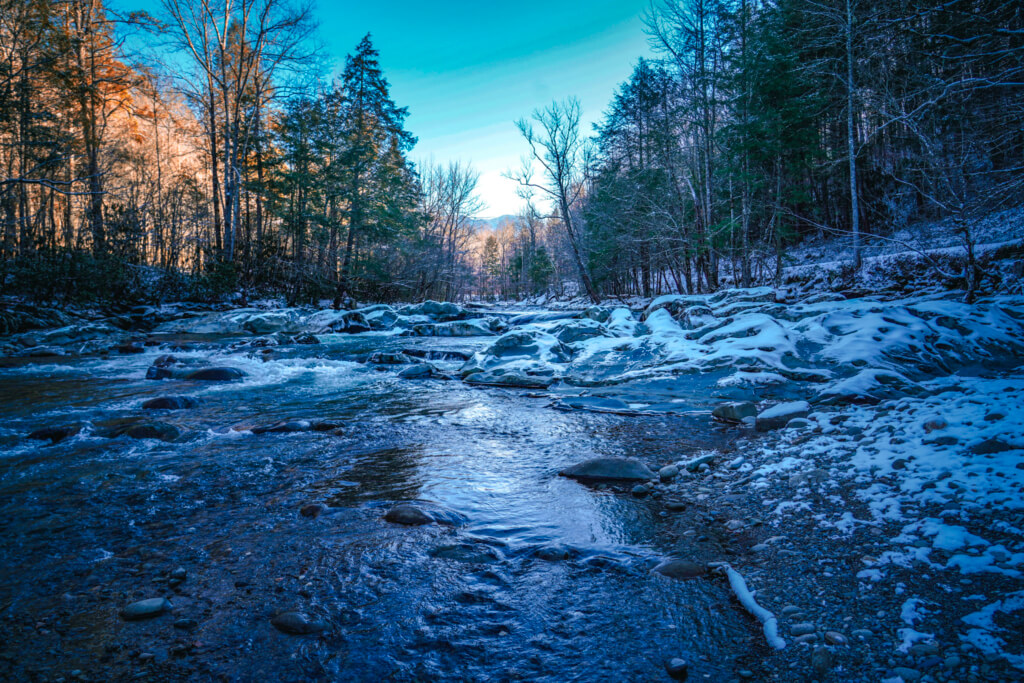
Fly fishing in Gatlinburg fits the Smokies almost suspiciously well. Cold mountain streams, wild trout, forest shade, and pocket water provide the classic Appalachian fly fishing experience.
Greenbrier, upper stretches of Little River, and park waters along the West Prong are good areas to consider when planning a fly fishing outing near Gatlinburg.
Artificial flies are especially relevant inside Great Smoky Mountains National Park because natural bait is prohibited. Only artificial flies or lures with a single hook are permitted.
Beginners who have never read moving water, selected flies, or waded a rocky mountain stream may benefit from hiring a local fly fishing guide. A guide can help with casting, stream reading, equipment, access, and understanding the difference between Gatlinburg and park regulations.
And yes, someone explaining why a trout ignored the six flies you carefully selected can occasionally preserve your sanity.
Fishing With Kids in Gatlinburg
For families, Herbert Holt Park is hard to beat.
The children’s stream around the park is reserved for kids ages 12 and younger, and the park includes easy access, the city’s trout facility, and an accessible fishing pier. Children 12 and younger do not need a Gatlinburg fishing license.
Mynatt Park also has a designated children’s fishing section along LeConte Creek.
Remember that Gatlinburg streams close every Thursday for stocking, including during family vacations when Thursday somehow turns out to be the one morning everyone woke up early.
Traveling with little ones? Our guide to visiting the Smoky Mountains with toddlers has more practical advice for planning a family-friendly day around naps, meals, scenic stops, and easy outdoor activities.
Beginner Tips for Fishing in Gatlinburg
A little planning goes a long way when mountain streams are involved.
- Know whose water you’re fishing. Gatlinburg city rules and national park rules are different.
- Check your license before leaving the hotel. Don’t assume a standard Tennessee license covers every Gatlinburg trout fishing situation.
- Use legal tackle. Inside Great Smoky Mountains National Park, bring artificial flies or single-hook lures and leave natural bait behind.
- Start with lighter tackle. Small mountain streams generally call for more finesse than heavy fishing gear.
- Try mornings and evenings in warm weather. Cooler conditions can be more comfortable for you and the fish.
- Wear secure footwear. Wet, mossy rocks are famously unimpressed by your sense of balance.
- Watch the weather upstream. Mountain storms can cause water to rise quickly even if it isn’t raining where you are.
- Check current road and trail conditions. Heavy rain, maintenance, and seasonal conditions can affect access.
- Avoid disturbing the streambed. Moving rocks can damage aquatic habitat and spawning areas.
Be a Clean Angler
Part of enjoying Smoky Mountain fishing is leaving the stream in better shape than you found it.
Clean fishing gear before moving between waterways to reduce the spread of invasive species. Pack out fishing line, trash, and anything else you brought with you.
Most importantly, don’t move rocks in Great Smoky Mountains National Park.
Building little rock dams might look harmless, but moving stream rocks is prohibited in the park and can damage fish nests, harm aquatic insects, alter habitat, and disrupt the stream ecosystem.
Admire the creek. Fish the creek. Skip the remodeling project.
Need to Know Before You Go
Before heading out for a day of Gatlinburg fishing:
- Bring the correct fishing license or permit.
- Check whether your fishing spot is inside Gatlinburg city limits or Great Smoky Mountains National Park.
- Remember that Gatlinburg-managed streams are closed on Thursdays.
- Use artificial flies or single-hook lures in park waters.
- Review current possession and minimum-size limits.
- Check weather, water levels, road conditions, and trail closures.
- Watch for slick rocks, cold water, and fast currents.
- Clean fishing equipment between waterways.
- Pack out discarded fishing line and trash.
- Never move rocks or disturb stream habitat inside the national park.
Gatlinburg Fishing FAQs
Yes, in most cases. Gatlinburg city waters have special trout licenses and permits, while anglers age 16 and older fishing inside Great Smoky Mountains National Park need a valid Tennessee or North Carolina fishing license or permit. Children age 12 and younger do not need a license for Gatlinburg city waters.
The West Prong of the Little Pigeon River is one of the easiest and most convenient places for trout fishing in Gatlinburg. Greenbrier and Little River offer more natural park settings, while Herbert Holt Park is especially useful for families with young anglers.
Yes. Fishing is permitted year-round in open park waters from 30 minutes before official sunrise until 30 minutes after official sunset.
Depending on the location, anglers can encounter rainbow trout, brook trout, brown trout, smallmouth bass, and rock bass. Rainbow trout are also stocked in Gatlinburg-managed waters.
Children ages 12 and younger do not need a Gatlinburg fishing license. Herbert Holt Park includes a designated children’s fishing section, and another children’s stream is located near Mynatt Park.
Natural bait is prohibited in park streams. Anglers may use artificial flies or lures with a single hook. Double, treble, and gang hooks are prohibited.
Spring and fall are excellent all-around choices, summer favors cooler mornings and higher-elevation streams, and winter offers quieter fishing. Great Smoky Mountains National Park fishing is available year-round in open waters.
Yes. Local fishing and fly fishing guides operate around Gatlinburg and the Smokies. Hiring a guide can be especially useful for beginners learning mountain-stream techniques or anglers unfamiliar with local access and regulations.
Yes. The West Prong of the Little Pigeon River runs through Gatlinburg and into Great Smoky Mountains National Park. Gatlinburg city regulations apply to city-managed sections, while national park fishing rules apply inside the park.
Gatlinburg-managed streams are closed every Thursday for stocking. Fishing is allowed from 30 minutes before sunrise until 30 minutes after sunset with one hand-held rod and one hook. December 1 through March 31 is catch-and-release season, with single-hook artificial flies or lures required and bait prohibited. From April 1 through November 30, general streams have a five-trout daily limit, while children’s streams have a two-trout limit.
Cast a Line in the Smokies
Fishing in Gatlinburg can mean standing beside a stocked trout stream minutes from downtown, slipping into the forest with a fly rod, helping a child reel in a first rainbow trout, or spending a quiet morning beside a mountain creek where the loudest thing around is rushing water.
Just remember that location matters. Gatlinburg fishing regulations and Great Smoky Mountains National Park regulations are not interchangeable, so check your license, tackle, limits, and access before you cast.
Once you’ve packed up the rods, keep the Smoky Mountain day going with MobileBrochure. Browse nearby outdoor activities, find more things to do in Gatlinburg, explore Great Smoky Mountains National Park, grab a bite at a local Gatlinburg restaurant, or check the latest Smoky Mountain coupons before planning your next stop.
Pair a quiet morning on the river with a scenic drive, a family attraction, or dinner in downtown Gatlinburg, and you’ve got yourself a pretty fine Smoky Mountain day.
Content on this page is subject to change. Please contact the locations mentioned to see if promotions, hours, pricing, etc. are still valid.

About Nicole Miller
Nicole Miller is a native Tennessean who currently resides in Asheville, North Carolina. Through her work with MobileBrochure, she covers destinations across the Southeast, including the Smoky Mountains and the Grand Strand, helping travelers discover things to do, places to eat and useful tips for planning their trips. Outside of work, she enjoys traveling, spending time outdoors, live music and anything that keeps her moving.
Leave a Reply