Camping in the Smoky Mountains: Best Campgrounds, Camping Types, and Planning Tips
Updated for 2026 with refreshed campground info, park camping guidance, and trip-planning tips.
Camping in the Smoky Mountains can mean a lot of different things, and that is exactly why so many travelers love it here. Some people want a full-hookup RV site near Pigeon Forge attractions. Others want a tent under the trees, a backcountry permit, or a quieter campground near trails and scenic drives in Great Smoky Mountains National Park. This guide is for families, RV campers, tent campers, and backcountry campers who want to sort through the options without bouncing between a dozen tabs. You will find the main campground types, the best time for camping in the Smoky Mountains, where to stay based on your style, and the planning details that matter most, such as reservations, permits, weather, and what to expect once you get there.
What You’ll Learn Before You Book
This guide breaks down the big decisions first. You will see the difference between frontcountry vs backcountry camping, RV resorts vs national park campgrounds, and Tennessee side vs North Carolina side options. It also covers reservation timing, permit requirements, and the kind of weather and wildlife conditions that can shape your trip in a hurry. Around here, a little planning goes a long way.
Types of Camping in the Smoky Mountains
Frontcountry campgrounds
Frontcountry camping is the easiest entry point for most people. In Great Smoky Mountains National Park, that means developed campgrounds where you camp near your car and have access to restrooms with cold running water and flush toilets, plus a picnic table and fire grate at each site. Good examples include Elkmont, Cades Cove, Smokemont, Cosby, and Deep Creek. This style is best for families, casual tent campers, and anyone who wants the national park experience without hiking miles to sleep.
Backcountry camping
Backcountry camping is for backpackers who want more solitude and do not mind earning their campsite. In the Smokies, overnight backcountry stays require a permit and advance reservations, and campsites can be several miles from the nearest road. This is best for experienced hikers, smaller groups, and campers who care more about quiet than convenience.
RV camping
RV camping in the Smokies usually splits into two lanes. You can stay in a private resort-style campground with hookups, pools, and laundry close to town, or you can choose a national park frontcountry campground if your rig fits the site limits and you are okay with a simpler setup. Private resorts are usually the better fit for bigger rigs, families who want amenities, and travelers who plan to mix camping with Gatlinburg, Pigeon Forge, or Sevierville attractions.
Group campgrounds
Group campgrounds in the national park are large frontcountry campsites built for groups of eight or more. They are a good fit for reunions, scout trips, and friend groups who want to camp together without splitting across multiple standard sites. National Park Service listings show group camping at places such as Cades Cove, Cataloochee, Cosby, Deep Creek, Elkmont, and Smokemont.
Best Campgrounds in the Smoky Mountains
Twin Mountain RV Park
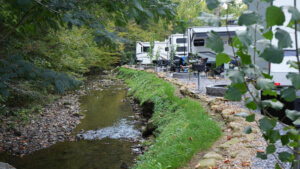
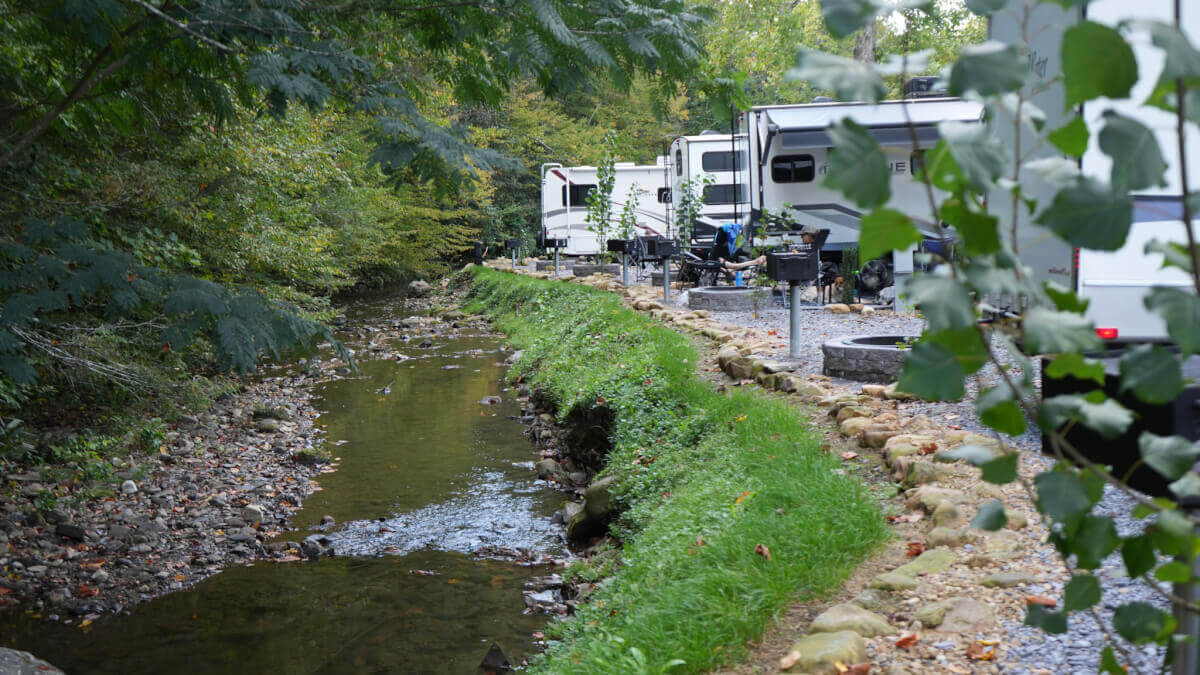
Twin Mountain RV Park is a Pigeon Forge option that keeps you close to the action while still giving you a riverside camping feel. Third-party tourism and campground listings place it along the Little Pigeon River with 30/50 amp service and a full range of RV-friendly basics, which makes it appealing for travelers who want campground downtime without being far from restaurants, trolley routes, and attractions. This is a good fit for RV campers and families who want convenience first and wilderness second. Reservations are a smart idea during peak Pigeon Forge travel periods.
Why it’s popular: It gives you a more central Pigeon Forge base than many campgrounds farther out.
Key features: Riverfront setting, RV-ready utilities, and easy access to town.
Who should stay here: Families, RV campers, and travelers who want to pair camping with nearby attractions.
Dudley Creek RV Resort
Dudley Creek RV Resort is a strong pick for campers who want a creekside RV stay without giving up easy access to Gatlinburg. Located on East Parkway in Gatlinburg, it offers full-hookup RV sites with 20/30/50 amp service, plus both creekside and standard site options. The setting feels more relaxed than staying right in the middle of town, but the on-site trolley stop makes it easy to get downtown without dealing with as much parking hassle. Reservations are recommended, especially for summer and fall stays.
Why it’s popular: It balances Smokies scenery with quick access to downtown Gatlinburg and the national park.
Key features: Full hookups, creekside sites, bath houses, laundry, pool with waterslide, fishing, WiFi, and trolley stop convenience.
Who should stay here: RV campers who want a quieter, more nature-forward base in Gatlinburg without feeling too far removed from attractions, restaurants, and Great Smoky Mountains National Park.
Anchor Down RV Resort
Anchor Down RV Resort is the scenic-view pick of the group. Located in Dandridge on Douglas Lake, it offers lakefront and lake-view sites with full hookups, concrete pads, paved streets, private bathhouse bathrooms, and a longer list of resort amenities than most campers probably expect from an RV stay. It is farther from Gatlinburg than the other two, but the tradeoff is the kind of open water and mountain view setup that makes people post “we may never leave” photos before dinner. Reservations are strongly recommended because the best lakefront and lake-view sites are in high demand.
Why it’s popular: It feels more like a vacation resort that happens to allow RVs.
Key features: Full hookups, private bathhouse bathrooms, lakefront and lake-view sites, paved streets, and family-friendly resort amenities.
Who should stay here: RV campers who care about views, bigger sites, and a more upscale stay.
Elkmont Campground
Elkmont is one of the most popular frontcountry campgrounds in Great Smoky Mountains National Park, and it is easy to see why. It sits close to Gatlinburg on the Tennessee side, gives you good access to hiking, and works well for campers who want that classic national park feel without being too far from town. It is a strong pick for tent campers, families, and anyone who wants hiking access to be part of the camping experience. Reservations are required through Recreation.gov. Nearby trail access is one of its biggest strengths, including routes in the Little River area.
Why it’s popular: Great location, strong trail access, and a familiar national park camping setup.
Key features: Developed campground amenities, proximity to Gatlinburg, and easy access to trails and scenic drives.
Who should stay here: Tent campers, families, and hikers.
Cades Cove Campground
Cades Cove is one of the best campgrounds in the Smokies for scenery, wildlife, and a true “we are in the park now” atmosphere. It is open year-round, which already gives it an edge, and it places you near one of the most popular scenic loops in the region. This one is a strong fit for families, wildlife lovers, and campers who want easy access to one of the park’s most photographed areas. Reservations are required through Recreation.gov. If your ideal camping morning includes deer, turkeys, and maybe a bear sighting before coffee is even cold, this is a strong contender.
Why it’s popular: Wildlife viewing, scenic drives, and year-round access.
Key features: Year-round operation, classic Smokies scenery, and direct access to the Cades Cove Loop Road.
Who should stay here: Families, photographers, and campers who want a park-centered trip.
Deep Creek Campground
Deep Creek is a North Carolina side favorite near Bryson City, and it works especially well for campers who want tubing, waterfalls, and a slightly different base than the Tennessee side. It is one of the easier campgrounds to tie to family fun because Deep Creek is known for water access and trail options nearby. This is a great choice for campers who want frontcountry convenience with strong outdoor play potential. Reservations are required through Recreation.gov.
Why it’s popular: Easy access to water activities and trails.
Key features: Frontcountry camping, North Carolina side access, and proximity to tubing and waterfall areas.
Who should stay here: Families, casual hikers, and campers who like a quieter North Carolina side base.
Frontcountry vs Backcountry Camping
This decision shapes almost everything else. Frontcountry camping is best for families, shorter stays, and anyone who wants easier logistics, restrooms, and access to the car. Backcountry camping is best for solitude, longer hikes, and a more rugged experience. Frontcountry usually wins on convenience. Backcountry wins on quiet. In Smokies terms, the question is often less “which is better?” and more “how much effort do you want your weekend to require?”
Tennessee Side vs North Carolina Side
The Tennessee side is usually better if you want quick access to Gatlinburg, Pigeon Forge, scenic drives such as Cades Cove, and the busiest stretch of trip-planning favorites. The North Carolina side often feels quieter and can be a better fit for campers who want Deep Creek, Smokemont, or a more low-key base. Neither is wrong. One just leans more convenience, while the other leans more calm.
What to Expect When Camping in the Smoky Mountains
Camping here comes with a few constants. Wildlife is part of the deal, including black bears and deer, so food storage and campground rules matter. Terrain and elevation can also change the feel of your trip fast, especially in the national park, where steeper roads, cooler nights, and quick weather shifts are part of the experience. Seasonal traffic and crowd levels can shape the trip more than people expect too, especially near Gatlinburg, Pigeon Forge, and popular scenic drives. That does not mean it is hard. It just means Smokies camping rewards people who prepare a little.
When Is the Best Time to Camp in the Smoky Mountains?
Spring
Spring is one of the best times for camping in the Smoky Mountains if you want wildflowers, moderate temperatures, and active trails without the full summer rush. It is especially appealing for tent campers and hikers.
Summer
Summer is peak season. Everything feels alive, kids are out of school, and campgrounds stay busy. It is a great time for family trips, but reservation pressure and crowd levels are higher.
Fall
Fall is gorgeous and high-demand. Foliage season makes campgrounds especially competitive, so this is one of the top times to book early. Cooler nights and scenic drives are hard to beat.
Winter
Winter camping can be quiet and beautiful, but access is more limited and not every campground stays open. Cades Cove and Smokemont are open year-round, while others operate seasonally. Winter is better for solitude than variety.
How to Plan Your Smoky Mountains Camping Trip
Reserve early, especially for summer, fall foliage season, and popular frontcountry campgrounds. The National Park Service says frontcountry campgrounds are busy in peak season, and reservations can be made up to six months in advance on Recreation.gov. Backcountry camping requires a permit and advance reservations.
Packing should match the region, not just the season. Bring layers, rain gear, and sturdy footwear. For backcountry stays, bear-safe food practices matter, and the park notes that campers should use food storage cables where provided. Mountain weather can shift quickly, and nights can feel cooler than expected even after a warm afternoon in town.
Nearby trip add-ons can help you decide where to base yourself. Campers on the Tennessee side can more easily mix camping with Gatlinburg, Pigeon Forge, Cades Cove, and the park’s busier scenic drives. Campers staying farther out in places such as Dandridge or Cosby often get a quieter home base with a little more breathing room between activities and traffic.
FAQ: Camping in the Smoky Mountains
Yes for most national park camping. The National Park Service says advance reservations are required year-round at all park campgrounds, and group and horse camps also require reservations. Backcountry camping requires a permit and advance reservations as well.
Not in Great Smoky Mountains National Park’s developed campgrounds. National park camping involves reservation systems and fees. Some dispersed camping options exist in nearby national forest areas, but not as a general “camp anywhere in the park” setup.
No. Camping is limited to designated frontcountry campgrounds, group campgrounds, horse camps, and permitted backcountry sites and shelters. Random roadside or off-trail camping is not part of the park system.
That depends on your version of family camping. Cades Cove is great for wildlife and scenery, Elkmont works well for trail access and a classic park feel, and private RV resorts such as Dudley Creek RV Resort lean into convenience, amenities, and easy access to Gatlinburg.
Yes. RV camping is available in private resorts throughout the area and in national park frontcountry campgrounds where site size limits work for your rig. Private resorts usually offer the easiest setup for full hookups and larger sites.
Frontcountry camping means staying near your car in a developed campground with restrooms and basic amenities. Backcountry camping means hiking to a campsite or shelter farther inside the park and carrying your own gear. Frontcountry is easier. Backcountry is quieter.
Plan Your Smoky Mountains Camping Trip
The best camping in the Smoky Mountains depends on what kind of trip you are actually trying to have. RV campers may want hookups, bigger sites, and easy access to town. Tent campers may care more about trails, shade, and a classic national park feel. Some stays are best for families, while others are better for solitude. Choose your campground based on your real priorities, book early when the season calls for it, and you will give yourself a much better shot at the kind of Smokies camping trip you were hoping for.
Content on this page is subject to change. Please contact the locations mentioned to see if promotions, hours, pricing, etc. are still valid.

About Nicole Miller
Nicole Miller is a native Tennessean who currently resides in Asheville, North Carolina. Through her work with MobileBrochure, she covers destinations across the Southeast, including the Smoky Mountains and the Grand Strand, helping travelers discover things to do, places to eat and useful tips for planning their trips. Outside of work, she enjoys traveling, spending time outdoors, live music and anything that keeps her moving.
Leave a Reply